
According to clinical research, a restricted lingual frenum has been associated with difficulties in sucking, swallowing and speech; and left untreated at birth is associated with OSA (obstructive sleep apnea) at a later age. A systematic screening for sleep related breathing disorders should be conducted when this anatomical abnormality is recognized in order to properly diagnose, treat and offer the child the best outcome for life-long healthy airways.
Guilleminault C, Huseni S, Lo L. A frequent phenotype for paediatric sleep apnoea: short lingual frenulum. ERJ Open Res. 2016;2(3):00043-2016. Published 2016 Jul 29. doi:10.1183/23120541.00 43-2016
Toddlers with lip or tongue ties can have speech problems, digestive troubles, non-restorative or interrupted sleep, behavioral issues and other symptoms that can be easily misdiagnosed. We screen all of their young patients for tongue and lip ties. If they see a problem, they recommend the most conservative and least invasive treatment that will improve the problem.
How a tongue or lip tie affects older children and adults:

Tuesday 7:30 am – 4:00 pm
Friday By Appointment
Assessment
Due to the nature of how a restricted lingual frenum can affect so many body processes, we assess the whole child, not just the two inch box of the mouth.
On assessment day for a frenectomy/frenuloplasty, we do the following:
What type of frenectomy procedures does Beyond Pediatric Dentistry offer?
Beyond Pediatric Dentistry offers two types of releases — a laser release and a functional frenuloplasty. The type of procedure performed depends on various factors that we will go over with you during your evaluation. Our Beyond Pediatric Dentistry dentists perform laser releases using a high tech LightScalpel C02 laser. If the tongue tie is more structurally complicated, a functional frenuloplasty may be needed.
Tongue or Lip Tie Releases at Beyond Pediatric Dentistry
A frenectomy or frenuloplasty is a relatively minor surgical procedure performed to loosen or remove overly large, tight, or poorly positioned band(s) of tissue that are present inside the mouth and connected to the lip, cheeks or floor of the mouth. This condition is commonly referred to as being “tongue tied” or “ankyloglossia”. Tongue ties can cause speech impediments and difficulties with chewing, swallowing and other aspects of oral function. Without liberation of the tongue or lip from anatomical restrictions, proper nasal breathing will be inhibited which can contribute to a myriad of other health issues.
In infants, this condition can impair feeding, and for some older children, teens and adults, cause daily discomfort or pain and lead to mouth breathing. Once the tissue has been removed, the wound will typically be sutured. A frenuloplasty is a quick procedure, generally taking less than 45 minutes, and is often performed with just local anesthesia in children.
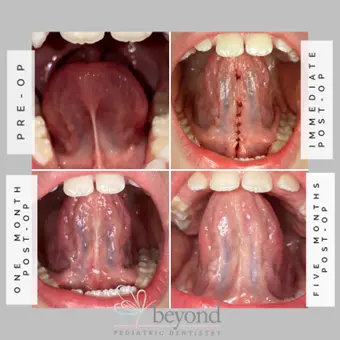

Who performs the functional frenuloplasty?
Dr. Loria performs the frenuloplasty procedures for all children in our office.
Beyond Pediatric Dentistry is an Affiliate of The Breathe Institute. What does this mean? Dr. Loria has completed The Breathe Institute’s Surgical Proctoring Mini-Residency Program, demonstrating a steadfast dedication to patient care by always seeking out the latest research and protocols related to tongue-ties, sleep, breathing, and overall wellness. As of today, only a select few pediatric dentists in the country have been chosen to complete specialized training 1:1 with world-renowned ENT–Sleep Surgeon, Dr. Soroush Zaghi. With this advanced training in functional lingual frenuloplasties, she has a very precise and functional technique for tongue-tie releases in children.
Check out http://breatheaffiliates.com to learn more!