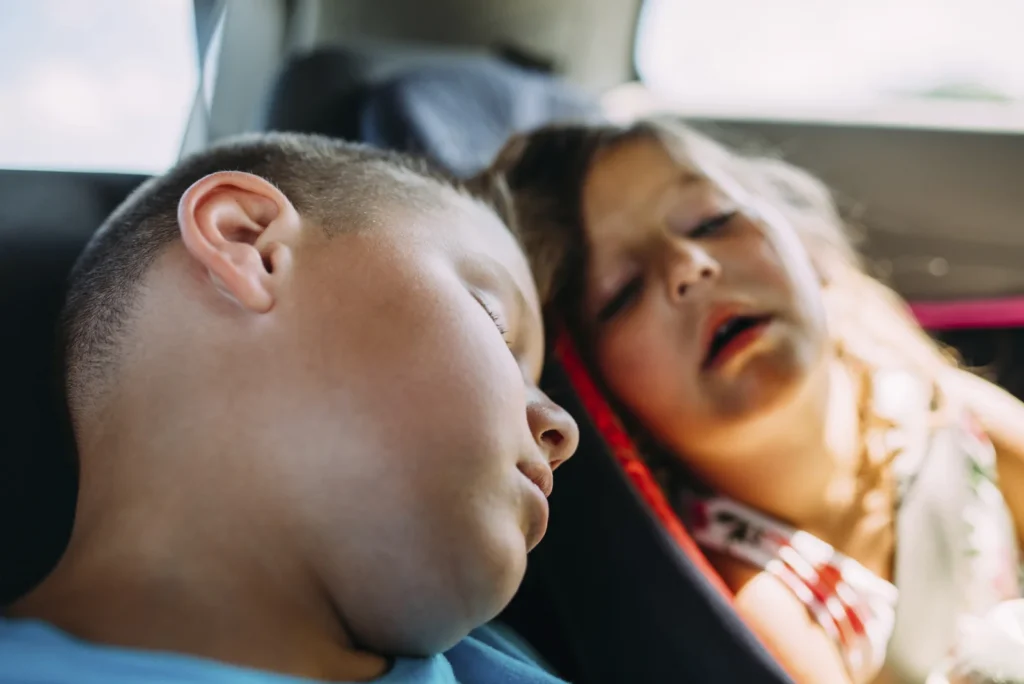

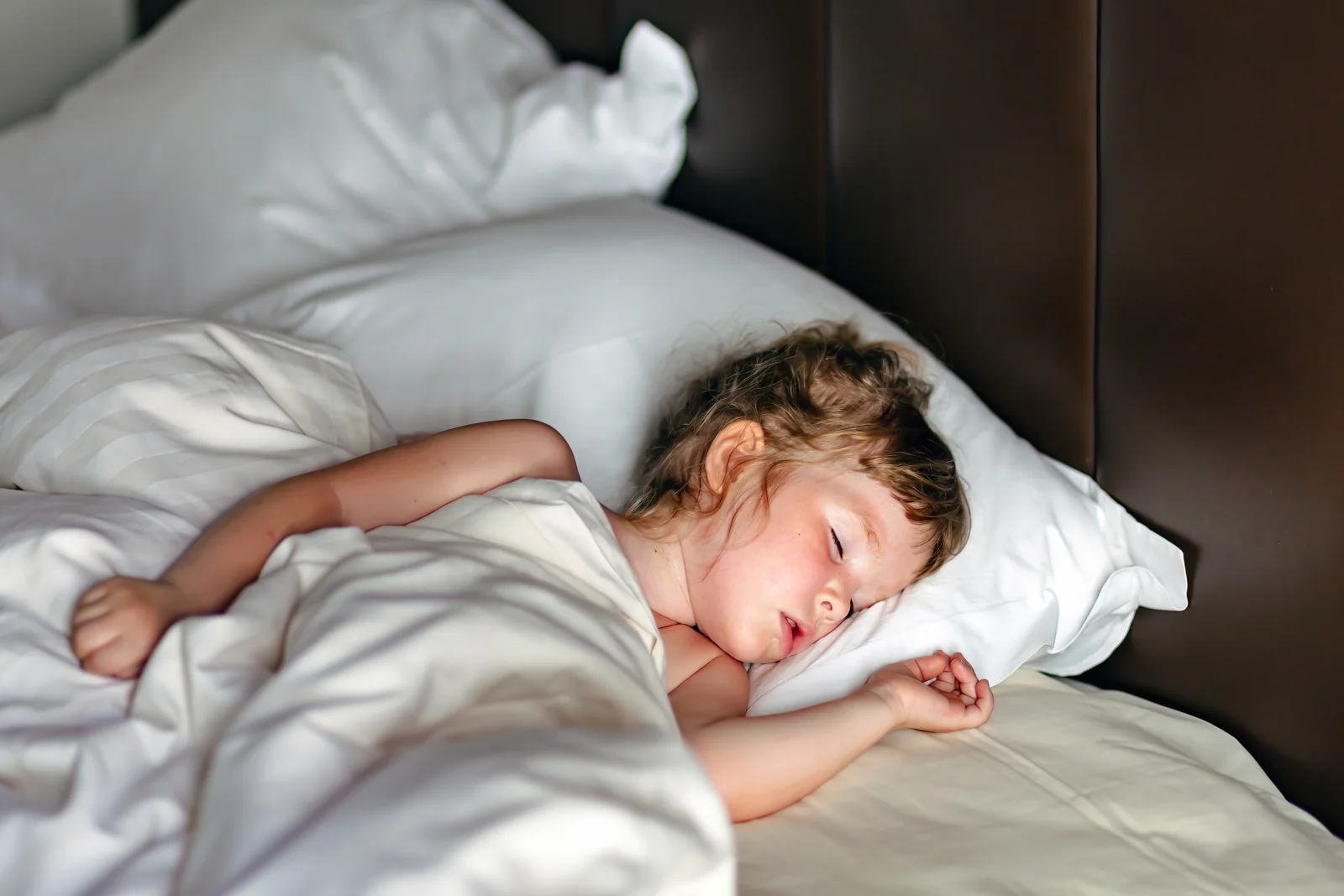
Quick answer:Child mouth breathing at night usually happens because something is making it harder to breathe through the nose — most often nasal congestion, allergies, enlarged tonsils or adenoids, or a habit that's continued after the original cause resolved. Occasional mouth breathing during a cold isn't typically concerning, but a persistent nightly pattern — especially alongside snoring or restless sleep — is worth having evaluated rather than assumed to be harmless.
This article is for general education and isn't a substitute for an in-person evaluation.
Why Does My Child Mouth Breathe at Night?
Mouth breathing in children is almost always the body compensating for restricted nasal airflow, not a random preference.
| Common Cause | What's Happening |
|---|---|
| Nasal congestion or allergies | Temporarily blocks nasal airflow, making the mouth the easier path |
| Enlarged tonsils or adenoids | Physically reduces airflow through the nose and throat |
| Structural nasal issues | A deviated septum or similar structural narrowing |
| A learned habit | Mouth breathing continues even after the original cause has resolved |
| A recent change from nose to mouth breathing | Can signal enlarged adenoids developing or worsening, rather than a lifelong pattern |
One detail worth paying attention to: if your child used to breathe through their nose and has more recently shifted to mouth breathing at night, that change itself can be a meaningful clue, as reflected in the last row above — it's worth mentioning specifically at an evaluation rather than describing mouth breathing only in general terms.
Why Nasal Breathing Matters
The nose isn't just a passive airway. According to Cleveland Clinic, nasal breathing filters out dust and allergens, warms and humidifies incoming air, and supports the body's production of nitric oxide, which helps circulation. Mouth breathing skips this conditioning, and during sleep specifically, it also changes the position of the tongue and soft tissue in the throat in ways that can make the airway more prone to narrowing.
Signs Parents Shouldn't Ignore
Mouth breathing at night rarely shows up alone. Pay attention to whether it's accompanied by:
- Snoring, even if it isn't loud
- Restless sleep, frequent waking, or unusual sleep positions
- Pauses in breathing, gasping, or choking sounds
- Waking with a dry mouth or sore throat
- Morning headaches
- Dark circles or puffiness under the eyes
- Daytime fatigue, irritability, or trouble concentrating — in some children, this shows up as hyperactivity rather than visible tiredness
- A narrow-looking upper jaw or dental crowding as teeth come in
- Bedwetting beyond the age it's usually expected to resolve
None of these signs alone confirms a problem, but a cluster of several together is a reasonable reason to have your child evaluated rather than waiting to see if it resolves.
How Mouth Breathing Can Affect Growth and Development
This is where a habit that seems minor becomes a genuine developmental concern. A systematic review and meta-analysis of pediatric mouth-breathing studies found consistent associations between chronic mouth breathing and facial skeletal changes — including the jaw rotating backward and downward, a steeper bite plane, a narrower airway space behind the tongue and soft palate, and a tendency for the upper front teeth to tilt forward. These changes happen gradually, which is part of why they're often not noticed until someone is specifically looking for the pattern during a dental or airway evaluation.
What an Evaluation Actually Looks At
A thorough evaluation for child mouth breathing at night typically includes a review of your observations and your child's health history, a clinical exam of the mouth, jaw, and airway structure, and — when appropriate — further screening to understand how your child is actually breathing during sleep. At Beyond Pediatric Dentistry, this can include a validated sleep screening questionnaire as part of a comprehensive exam, and, depending on findings, tools like the Sleep Image device, which your child can wear at home to help assess sleep quality, or an i-CAT scan, which provides imaging of airway structure to support a more complete picture alongside the clinical exam. Imaging alone doesn't diagnose a sleep-related breathing problem — it's one piece of information used together with screening and exam findings to determine next steps, including whether outside referrals are appropriate.
Getting a Clear Answer
If your child regularly breathes through their mouth at night, the most useful next step is understanding why, rather than assuming it's just a phase. Learn more about how we approach this evaluation on our Airway Health & Sleep Disordered Breathing page.
Frequently Asked Questions
Is it normal for my child to mouth breathe sometimes?
Occasional mouth breathing during a cold or allergy flare is common and usually resolves as congestion clears. A persistent, nightly pattern is what's worth having evaluated.
Can mouth breathing in children actually affect how their face and teeth develop?
Yes, when it's chronic. Research has linked ongoing mouth breathing to changes in jaw position, bite development, and airway space, since the pattern disrupts the normal tongue posture that supports healthy palate growth.
My child used to breathe through their nose — why did this change?
A shift from nose breathing to mouth breathing can sometimes point to enlarged tonsils or adenoids developing or worsening. It's worth mentioning this specific change at an evaluation rather than assuming it's unrelated.
When should I have my child evaluated?
If mouth breathing happens most nights rather than occasionally, or comes with snoring, restless sleep, or daytime fatigue, it's reasonable to have it evaluated rather than waiting to see if it resolves on its own.
Getting Started
If you've noticed your child mouth breathing at night, especially alongside any of the signs above, schedule an evaluation to get a clearer picture of what's actually happening while your child sleeps.
References
- Cleveland Clinic. Should You Breathe Through Your Nose or Mouth? Cleveland Clinic Health Library. https://health.clevelandclinic.org/breathe-mouth-nose
- Effects of mouth breathing on facial skeletal development in children: a systematic review and meta-analysis. PubMed / BMC Oral Health, PMC, National Library of Medicine. https://www.ncbi.nlm.nih.gov/pmc/articles/PMC7944632/